The Kitchen Drawer Trials: A Thoroughly Unofficial Audit of Scratchcard Tools
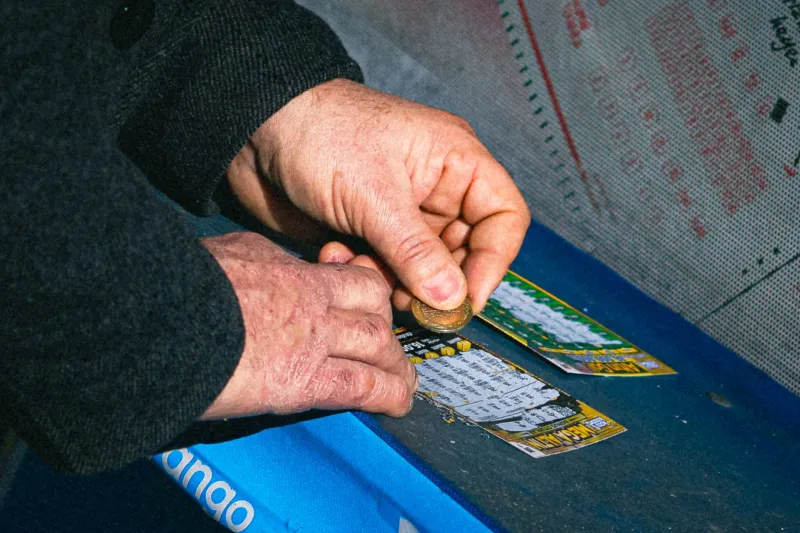
Somewhere in Britain, right now, a person is rummaging through a kitchen drawer for something — anything — to scratch a scratchcard. This is not a crisis. It is a ritual. The drawer offers a teaspoon, a key, a guitar pick from a forgotten hobby, and possibly a 20p coin that has been living near the fuse box since March. The question is not whether any of these objects will change your luck. It won’t. The question is which one gets the foil off cleanly without making you look like you are performing minor surgery on a biscuit wrapper.
Welcome to the Kitchen Drawer Trials: a completely unscientific field test conducted at a slightly sticky table, under a sensible lamp, with a mug of tea going cold in the background. No laboratory was harmed. No odds were altered. The cat was present and unimpressed throughout.
The Method (Such As It Was)
Five low-stakes scratchcards were used — the sort bought for a bit of fun, not a deposit on a yacht. Each was scratched with one tool, in the same lighting, on the same table, by the same person wearing the same expression of mild optimism. The tools were scored out of ten on four measures:
- Comfort: does your hand still work afterwards?
- Control: can you stop before removing the card’s actual print?
- Foil dust: how much glittery debris ends up on the table, sleeve and cat?
- Dignity: how odd would this look in a corner shop queue?
Scores are arbitrary. The odds printed on the card are not. More on that later.
The 20p Coin: The Classic, With Caveats
Comfort 8 | Control 9 | Foil dust 7 | Dignity 9
The 20p is the default for a reason. It has a decent edge, a familiar weight and the quiet authority of something that has already been in a vending machine. It scratches with a satisfying rasp and gives you enough control to stop at the edge of the play area rather than excavating the terms and conditions.
The caveat is repetition. By card three, your thumb starts to feel like it has been to a very small gym. By card five, you are doing mental arithmetic with a coin in your hand, which is never a good look. Still, for public scratching, the 20p remains the least conspicuous choice. It says “I am participating in a normal leisure activity” rather than “I have brought equipment.”
The House Key: Too Much Tool for the Job
Comfort 5 | Control 7 | Foil dust 5 | Dignity 6
The house key feels efficient until you actually use it. The edge is sharp enough to bite into the foil, but the teeth catch on the card in a way that suggests the card did not consent to this. You get a jagged reveal, a few near-misses and the vague anxiety that you are about to explain a scratched kitchen table to someone else.
It is fine if it is your own key, your own card and your own table. It is less fine if you are borrowing a key, using a card someone gave you, or sitting in a café where the table has feelings. Dignity takes another knock when you have to wipe foil dust off a Yale lock. Verdict: a tool of last resort, and possibly a sign that the drawer needs reorganising.
The Thumbnail: Free, Personal, Slightly Regrettable
Comfort 3 | Control 6 | Foil dust 9 | Dignity 8
There is something admirably optimistic about using a thumbnail. It is always available, it requires no setup, and it produces almost no dust. For the first ten seconds, you feel like a resourceful person in a survival documentary.
Then the foil resists. The nail bends. You remember that thumbs are not designed for repeated lateral scraping, and you begin to use the side of the nail in a way that will make you wince later. The thumbnail is a warm-up act, not a main event. It is also a terrible idea if you have recently painted your nails, unless you enjoy the look of a tiny crime scene.
The Teaspoon: Surprisingly Civilised
Comfort 9 | Control 8 | Foil dust 4 | Dignity 7
The teaspoon is the quiet overachiever of the drawer. The bowl gives you purchase, the handle gives you leverage, and the whole thing feels pleasantly domestic. You are not scratching a card; you are gently preparing it. At home, with a tea nearby, this is a genuinely comfortable experience.
The downside is dust. The spoon tends to lift foil in slightly larger flakes, which then migrate across the table like tiny metallic confetti. Also, there is a real risk of reaching for the teaspoon, scratching the card, and then accidentally making tea with the same teaspoon. This is not a health hazard so much as a flavour one. Score it highly for comfort, low for tidiness.
The Guitar Pick: The Dark Horse
Comfort 9 | Control 9 | Foil dust 8 | Dignity 4
If you happen to own a guitar pick, it is an excellent scratching tool. The edge is smooth but firm, the shape sits nicely between finger and thumb, and the control is superb. Foil comes away in neat little curls. You feel like a person with hobbies, a person who owns a capo and has opinions about string gauges.
In public, however, the guitar pick is a dignity risk. Pulling one out in a corner shop queue looks like you have brought specialist equipment to a biscuit fight. People will assume you are about to do something impressive. You are not. You are scratching a £2 card and hoping for a free go. The pick is best kept for home, where the only witness is the cat.
The Results, Loosely Speaking
If the scoring is to be believed — and it really shouldn’t be — the teaspoon wins on comfort, the guitar pick wins on control, and the 20p coin wins on not looking peculiar in public. The house key is a blunt instrument in every sense. The thumbnail is a reminder that the human body is not a toolkit.
But here is the bit that matters more than any score: no tool changes the odds. A coin, a key, a spoon or a plectrum will not make a losing card winning. Scratchcards are designed as entertainment, with the odds printed on the card or available from the operator. The only thing a better tool improves is the tidiness of your kitchen table and the state of your thumbnail.
So keep it low-stakes. Set a spend you would be happy to lose before you start, take a break if it stops being a laugh, and remember that the real prize is a clean scratch, a hot cup of tea and not having to explain foil dust to a cat. If gambling stops feeling like fun, step away and speak to a support service such as GamCare. Players must be 18 or over. The drawer can stay exactly as it is — chaotic, useful and entirely incapable of changing your luck.