The Menu Behind the Till: Scoring Your Corner Shop's Scratchcard Display Out of Ten
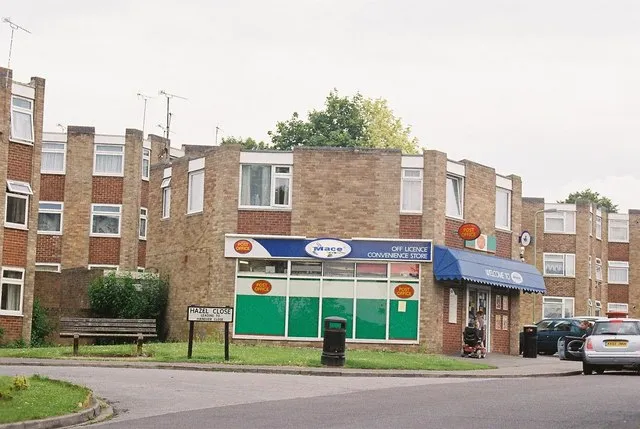
Photo: Chris Downer, CC BY-SA 2.0, via Wikimedia Commons
There is a certain kind of restaurant critic who arrives unannounced, orders the cheapest item on the menu and then files nine hundred words about the lighting. This is that, but for the scratchcard display behind the counter at your local shop. No booking needed. No dress code. A card you were already going to buy is your cover charge.
The method is straightforward: next time you are at the till, spend ten extra seconds actually looking at how the cards are presented. Score what you see. Keep the score to yourself, or — if you are feeling brave and the shop is quiet — tell the person behind the counter. Most of them will be delighted. A few will look at you the way people look at a wasp in August.
The Reservation: Reading the Queue
Before you judge a restaurant, you judge the wait. Same here. Is the queue a gentle conga of two pensioners and a dog, or a scrum of eleven people all holding a single pint of milk?
A good scratchcard display is reachable. You should be able to point at the card you want without leaning across somebody buying a lottery ticket and a lighter. Bonus marks if the rack is positioned where you can consider it privately rather than performing your choice for an audience of six.
Deductions for: the rack being turned away from the customer. It is not a secret menu. It is a spinning turntable of hope priced at two pounds.
The Lighting: A Study in Fluorescent Honesty
Restaurants fuss over candlelight. Corner shops have one bulb that has been flickering since the spring and a fridge that hums in B flat.
This is fine — even charming — provided you can actually read the prices. If the glare turns every card into a silver rectangle of mystery, that is a presentation failure, not an atmosphere. The ideal lighting makes the colours pop, the prize panels legible, and the word 'top prize' not look like a mirage.
The Presentation: How the Rack Is Dressed
Here is where a shop really earns its stars. Are the cards tidy, fanned, facing forward, and grouped by price? Or is it a cardboard avalanche where every fiver is hiding behind a lucky dip and the top row has gone soft at the corner?
A well-dressed rack tells you something about a shop. It suggests somebody cares. It also saves you the small humiliation of standing there like a scholar of Renaissance art, tilting your head to work out whether that is a £1 card or a £3 card.
Deduct further points if the display is half empty and nobody has restocked it since roughly the last bank holiday.
The Patter: Counter Conversation as Amuse-Bouche
A great shop has banter. Not intrusive banter — just the right amount. 'Any luck last week?' is the correct opening. 'You want the one that wins' is technically helpful and emotionally useless, but it is said with such warmth that you accept it.
Points off for the hard sell. Points off, too, for total silence and eye contact that suggests you have personally wronged them. The ideal is the middle: a nod, a card, a comment about the weather, done.
The Ambience: Drizzle, Radio 2 and the Fridge Hum
You cannot review a corner shop without reviewing the sound of it. The till beep. The radio playing something from 1998. The hand dryer in the loo that sounds like a jet.
And the drizzle outside, visible through the window, which somehow makes the whole ritual better. A scratchcard bought in blazing sunshine feels reckless. A scratchcard bought while sheltering from a grey November afternoon feels like a small, sensible pleasure.
The Small Print: The Responsible-Play Test
This is the category that separates a good shop from a great one, and it is the one most of us never look for.
Can you see any responsible-play information anywhere on or near the display? Is the 18+ notice there? Does the shop look like it takes age checks seriously? Is there a leaflet or a sign pointing towards support if someone needs it?
These things are not mood-killers. They are the equivalent of a restaurant displaying its hygiene rating: unglamorous, reassuring, and the mark of somewhere that has thought about its customers.
The Bill: Adding It All Up
Now the scoring. Ten points across five categories, which the mathematically inclined will notice is two points each. Or, if you prefer a restaurant-style system, a simple out-of-ten with decimals.
| Category | What you are judging | Score |
|---|---|---|
| Access | Can you reach and read the rack without an incident? | /2 |
| Lighting | Is the display legible and the price clear? | /2 |
| Presentation | Tidy, stocked, fanned, not a cardboard avalanche | /2 |
| Patter | Friendly, brief, no hard sell | /2 |
| Small print | Visible responsible-play and 18+ signage | /2 |
Eight to ten: a temple of low-stakes retail. Four to seven: perfectly fine, could try harder. Below four: buy your card, say thank you, and write a stern review in your head on the walk home.
The Critic's Note
The rules of this particular restaurant guide are simple. You buy one card — the one you meant to buy — and you spend nothing extra on the review itself. Scratchcards are for adults aged 18 and over, and they are a bit of fun with a fixed price, not an investment strategy.
Set a limit before you go in, stick to it, and if the fun ever stops feeling light, step away and talk to someone. GamCare and BeGambleAware are both there, free and confidential, and they will not judge your review scores.
Four stars for the lighting. One star for the rack being turned away from the customer. We shall return in the spring.